Spring Flowers Seamless Patterns: A Versatile Design Asset for Creative and Professional Workflows
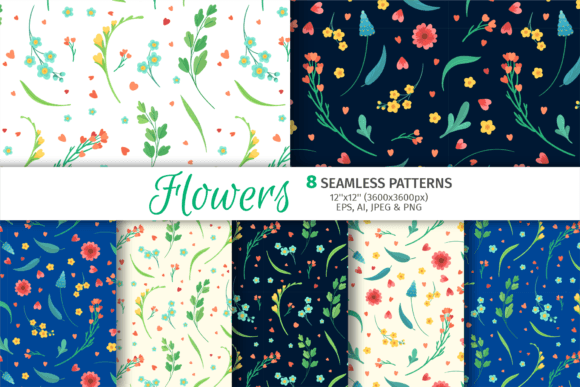
Spring Flowers Seamless Patterns is a digital design asset that brings the vibrant energy of springtime into your creative projects. This collection includes eight seamless patterns in multiple formats—AI, EPS, PNG, and JPEG—making it adaptable for a wide range of uses. Whether you're designing marketing materials, crafting digital illustrations, or enhancing website backgrounds, these patterns offer a natural, organic aesthetic that can elevate your work.
Understanding Spring Flowers Seamless Patterns
At its core, Spring Flowers Seamless Patterns is a vector background set featuring blooming meadow wildflowers, leaves, and hearts. The seamless nature of the design means it can be tiled without visible repetition, making it ideal for large-scale applications such as banners, posters, and website headers. The inclusion of AI and EPS formats ensures scalability without loss of quality, while PNG and JPEG formats provide flexibility for web and print use.
The integration of hearts into the pattern adds an element of warmth and positivity, making it particularly well-suited for branding related to wellness, education, and community initiatives. The overall design is both aesthetically pleasing and functionally versatile, offering a balance between visual appeal and practicality.
Where Spring Flowers Seamless Patterns Fits in Your Workflow
These patterns are not just decorative; they serve as foundational elements in various stages of a project. Before starting a design task, incorporating Spring Flowers Seamless Patterns can help establish a visual tone and guide color choices. During the execution phase, they can act as background layers that allow other design elements to stand out. After completing a project, they can be repurposed for different platforms or used as templates for future work.
For marketers, these patterns can be used to create cohesive brand visuals across social media, email campaigns, and print collateral. Educators might use them as backgrounds for presentations or learning materials to create a calming and engaging environment. Entrepreneurs and small business owners can benefit from their versatility in creating branded merchandise, packaging, or promotional content.
Integration with Other Tools and Resources
Spring Flowers Seamless Patterns works seamlessly with popular design software such as Adobe Illustrator, Photoshop, and Canva. The AI and EPS formats ensure compatibility with vector-based workflows, allowing for easy editing and customization. For those working in raster-based environments, the PNG and JPEG files provide high-resolution options suitable for both screen and print.
When paired with tools like Figma or Sketch, these patterns can be embedded directly into design systems, ensuring consistency across all assets. They also integrate well with stock image platforms and can be combined with photographs or icons to create layered, dynamic compositions.
Practical Implementation Tips
To get the most out of Spring Flowers Seamless Patterns, consider the following tips:
- Use as a Base Layer: Apply the pattern as a base layer in your designs to create a subtle background that enhances the overall composition without overpowering other elements.
- Experiment with Opacity: Adjust the opacity of the pattern to achieve the desired level of visibility. A lower opacity can create a more subdued effect, while a higher opacity can add vibrancy.
- Combine with Textures: Overlay the pattern with textures or gradients to add depth and complexity to your designs.
- Customize Colors: Modify the color palette of the pattern to match your brand's identity or the specific needs of your project.
Additionally, consider how the pattern interacts with other design elements. For example, if using it on a website, ensure that it doesn't interfere with readability or usability. Test the pattern on different screen sizes and resolutions to confirm its effectiveness across all devices.
Workflow Examples
Here are a few examples of how Spring Flowers Seamless Patterns can be integrated into different workflows:
- Marketing Campaigns: Use the pattern as a background for email newsletters or social media posts to maintain a consistent visual theme across all channels.
- Product Packaging: Incorporate the pattern into packaging designs to create a sense of freshness and approachability, especially for products related to health, beauty, or sustainability.
- Website Design: Apply the pattern to headers, footers, or section dividers to add a touch of nature and personality to your site's layout.
- Print Materials: Utilize the pattern in brochures, flyers, or posters to create visually appealing content that stands out in print.
By integrating Spring Flowers Seamless Patterns into these workflows, you can streamline your design process and ensure that your final output aligns with your creative vision.
Considerations for Long-Term Use
When considering long-term use of Spring Flowers Seamless Patterns, it's important to evaluate factors such as file organization, version control, and accessibility. Store the files in a centralized location or cloud storage solution to ensure easy access and backup. Label each file clearly with relevant information, such as the format, purpose, and date of creation.
Regularly review and update your design library to keep it current and relevant. This includes removing outdated patterns and adding new ones that better suit evolving project requirements. Additionally, consider the licensing terms of the patterns to ensure compliance with usage rights, especially when working on commercial projects.
Consistency is key when using these patterns across multiple projects. Establish a naming convention and folder structure that makes it easy to locate and apply the right pattern at the right time. This will save time and reduce errors in the long run.
Quality Control and Usability
Before finalizing any design that incorporates Spring Flowers Seamless Patterns, conduct a thorough quality check. Ensure that the pattern is aligned correctly, the colors are accurate, and there are no visible seams or distortions. Test the design on different screens and printers to confirm that it looks good in all contexts.
Usability should also be a priority. If the pattern is being used on a website, make sure that it doesn't compromise the site's performance or user experience. Optimize images where necessary and avoid overusing the pattern in areas where it could cause distractions.
Finally, take the time to understand the nuances of the pattern and how it can be adapted to different scenarios. By doing so, you'll be able to maximize its potential and create designs that are both functional and beautiful.